The Stories We Tell Ourselves
We love a good origin story. The entrepreneur who started in a garage. The waitress who worked three jobs and ended up running her own business. The immigrant who came to America with nothing. The underdog who “pulled themselves up by the bootstraps” and made it big. The working poor person made millionaire with nothing but grit.
These stories make us feel good. They remind us that anything is possible and maybe more importantly—they make us feel safe.
If the world is fair and we work hard enough, good things will follow. If the only thing separating success from struggle is effort, then we get to believe that it “won’t ever happen to me.” That homelessness, job loss, or poverty is something that happens to other people. People who didn’t try hard enough. People who made bad decisions. People who didn’t think ahead.
The idea of pulling yourself up by the bootstraps sounds noble—empowering, even but what if you don’t have boots? Let alone straps.
The truth is that most Americans are far closer to the edge than they realize. According to recent surveys, 78% of Americans live paycheck to paycheck, and nearly half don’t have $400 saved for an emergency. A single car repair, an unexpected illness, or one missed shift could send someone into a spiral of debt, instability—or even homelessness.
And yet, we still attach moral value to poverty. We act as though being poor is the result of laziness. We rarely ask why someone is in the position they’re in—we just assume they didn’t “want it” badly enough.
A Tale of Two Childhoods
Let me paint you a picture: two children grow up in the same town. Both are bright, curious, and full of potential but their environments are wildly different.
One grows up in a home where the bills are paid on time. There’s dinner on the table every night. When shoes are outgrown, new ones appear without question. There are books on the shelf, family vacations, and a clear expectation that college will happen. A parent explains what a résumé is, how to dress for an interview, and how to present yourself online.
There’s room to fail and time to recover.
The other grows up in a home where the electricity is shut off in the winter more than once. Dinner might be ramen... or nothing. Shoes are duct-taped together. Failure doesn’t bring guidance, it brings consequences. Maybe there’s love. Maybe there’s addiction. Or untreated mental illness. Or the generational weight of “not enough.” College is seen as a fantasy, not a plan and bringing it up sparks tension. "I didn’t go to college. Nobody in this family did. What makes you think you’re better than us?"
Fast forward twenty years.
The first young adult lands a paid internship, thanks to a family connection. They can afford to work for experience, building a résumé and reputation. They know how to shake hands, send thank-you emails, and lean on an invisible safety net if things don’t work out.
The second? Just as smart, maybe smarter. Just as driven. But there’s no margin for error. No network. No cushion. One flat tire could mean a missed shift. One sick day could cost a job and a bad reference to go with it. "He was nice enough, but he could never get to work on time."
She had potential, but she was a little rough around the edges for our customers..."
We look at the first and call them successful. We look at the second and ask, Why didn’t they just try harder?
But the truth is simple: One had support, access, and stability. The other had obstacles, stress, and survival mode.
It’s easy to compare these two paths and assume one made better choices. But that assumption ignores everything that shaped the journey. It skips over the invisible advantages, the silent burdens, and the reality that hard work doesn’t always look the same or lead to the same results.
And this is where stigma seeps in. Quietly. Automatically. In the snap judgments we make about what struggle should look like.
What the Working Poor Are Up Against
There’s an unspoken belief that if someone’s struggling financially, they shouldn’t own anything of value. Drive a decent car? Must be bad with money. Have a smartphone? Irresponsible.
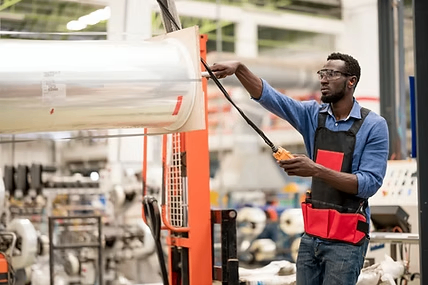
We equate poverty with visible suffering and if someone doesn’t look poor enough, we question whether they’re struggling at all. This mindset disproportionately impacts the working poor—people who are employed, often full-time, and still can’t cover basic needs.
Let’s take a car, for example:
If someone working a low-wage job drives a reliable 2023 Jeep Grand Cherokee, we wonder, Why do they have that?
But if they drive a rusty 2004 Dodge Neon that breaks down monthly, we criticize that too. "They’re wasting money. They should just get a car loan like everyone else."
It’s a lose-lose and it matters, because these snap judgments shape the way we treat people.
“We say we don’t judge. But we do and when we judge, we offer less. Less trust. Less generosity. Less opportunity.”
This stigma doesn’t just impact strangers, it reaches into hiring decisions, housing applications, and even how nonprofit support is distributed. The working poor often fall through the cracks: not poor enough for certain aid, not stable enough to thrive without it.
The Stroller Story
In nearly a decade of nonprofit work connecting people in need with those who want to help, I’ve lost count of the private messages accusing someone of “gaming the system.”
Why? Because the recipient had a decent car. Or lived in a “too nice” neighborhood.
"They don’t look like they need help. Their life looks better than mine! "No context. No questions. Just perception turned into outrage.
But here’s what we miss: the story behind the surface.
A few years ago, a young mom reached out, asking for help getting a stroller. She was battling postpartum depression and wanted to start walking again—to get outside, to feel human. A donor stepped up with a beautiful, gently used jogging stroller.
A few days later, the donor saw the stroller listed for sale online. They were furious.
"She scammed me. She just wanted to flip it for cash. I was trying to help, and she took advantage of me. I could’ve just sold it myself if that’s what it was about!"
After years of working with struggling people I have learned a vital skill, ask for the other side of the story before reacting. There are always two sides.
When I asked the mom what happened and we she was selling the stroller, she cried. She said it was the kindest gift anyone had ever given her. She loved the stroller so much. She had never owned something so nice... But shortly after receiving it, she dropped her only can of baby formula. It spilled across the floor completely ruined and unusable.
She had no extra, no money, and no way to feed her baby. She said she cried in that moment because she felt like she couldn't catch a break... the weight was almost unbearable. So, she sold the one thing of value she had.
Not because she didn’t appreciate it. Not because she didn't want that stroller desperately. But because she understood the difference between a want and a need. She made a choice—like she did every day for her entire life—between what she hoped for and what survival demanded.
She wasn’t ungrateful. She wasn’t dishonest. She was a mother doing what mothers so often must do (in hard times especially)... sacrificing what she loved to take care of her child.
It was exactly what any of us would hope someone would do with help but without context, it looked like betrayal.
And maybe even now, as you read this, there’s a voice in your head still wondering, Yeah… but is that really what happened?
We can’t help it. That seed of doubt lives in all of us because if her story is real, if that’s what struggle can look like then the world isn’t fair and that’s a hard thing to accept.
We want to believe that good things happen to good people. That hard work guarantees success. That poverty only comes to those who deserve it. That we will never find ourselves holding the tainted title of "working poor.'
“But life doesn’t follow those rules and the people struggling the most, especially among the working poor, are often the ones trying the hardest to hold it all together”
What Real Help Looks Like
So what do we do with that?
We start by rethinking what it means to help.
There’s a big difference between a handout and a hand up.
A handout says, Here’s something because you can’t help yourself—and I want to feel good.
A hand up says, Here’s something because I believe in you and where you’re going.
One is layered with judgment.
The other, with dignity.
And just as important as how we give—is how we expect others to receive.
I’ve seen many generous people offer help with full hearts—only to feel disappointed when the person receiving didn’t respond the way they hoped.
Maybe there was no emotional thank-you. No visible gratitude. No follow-up note.
Maybe they never heard from the person again.
But here’s the thing:
What feels like a “helper’s high” for the giver might be the most humbling, painful moment of the receiver’s life.
They might feel exposed. Ashamed. Barely holding it together.
Sometimes, a quiet, tired “thank you” is all they can manage.
And that’s enough.
Letting Go of Judgment
Helping shouldn't come with conditions.
Compassion doesn’t require proof.
If we truly want to support the working poor and create a more just and generous world, we have to stop deciding who’s worthy of help based on what they own, how they look, or how grateful they seem.
What someone needs isn’t always obvious and what they deserve isn’t ours to decide.
-------------------------------------------------------
HelpLink is a 501(c)(3) nonprofit that brings businesses, nonprofits, and communities together in one tech-enabled platform to deliver fast, dignified, discreet support for essential needs. We help prevent everyday emergencies like a past-due bill, a broken-down car, or gas for work from becoming missed shifts, lost income, or job loss.
Through transparent, automated giving, support is easier to offer, easier to access, and more dignified to receive — right when it matters most. Learn more or book a demo here: helplink.org/businesses